Introduction
The Goods and Services Tax (GST) system was introduced to eliminate the cascading effect of taxes and bring transparency to India’s indirect tax structure. One of its most powerful features is Input Tax Credit (ITC)—a mechanism that allows businesses to claim credit for the tax paid on purchases.
On paper, ITC appears to be a major benefit for businesses. However, the ground-level Tax Credit Reality tells a more complex story. While ITC reduces tax burden and improves cash flow, it also comes with strict conditions, compliance challenges, and frequent disputes.
This raises an important question: Is Input Tax Credit truly a benefit, or has it become a compliance trap for businesses?
In this blog, we explore the Tax Credit Reality from both perspectives.
What is Input Tax Credit (ITC)?
Input Tax Credit allows a registered taxpayer to reduce the tax paid on inputs (purchases) from the tax payable on outputs (sales).
Example:
If a business pays ₹1,000 as GST on purchases and collects ₹1,500 as GST on sales, it can claim ₹1,000 as ITC and pay only ₹500 to the government.
This system ensures:
No double taxation
Smooth tax flow across the supply chain
Reduced overall tax burden
The Positive Side: ITC as a Major Benefit
1. Eliminates Cascading Effect of Taxes
Before GST, taxes were applied on top of taxes, increasing costs. ITC removes this burden, making the system more efficient.
2. Reduces Cost of Doing Business
By allowing credit on purchases, ITC lowers overall tax liability, helping businesses:
Improve profit margins
Offer competitive pricing
3. Improves Cash Flow
ITC reduces the amount of tax payable in cash, allowing businesses to:
Retain working capital
Invest in growth
4. Encourages Formal Economy
To claim ITC, businesses must deal with registered suppliers, which:
Promotes transparency
Reduces tax evasion
5. Seamless Credit Chain
The GST framework ensures that tax credit flows smoothly across the supply chain, benefiting all stakeholders.
From this perspective, the Tax Credit Reality appears highly positive and growth-oriented.
The Negative Side: ITC as a Compliance Trap
Despite its benefits, many businesses face serious challenges with ITC.
1. Strict Eligibility Conditions
To claim ITC, taxpayers must fulfill multiple conditions:
Possession of a valid tax invoice
Receipt of goods/services
Supplier must pay tax to the government
Filing of returns
Failure in any condition can result in ITC denial.
2. Dependency on Supplier Compliance
One of the biggest concerns in the Tax Credit Reality is that:
Even if the buyer is compliant,
ITC can be denied if the supplier defaults
This creates uncertainty and risk for businesses.
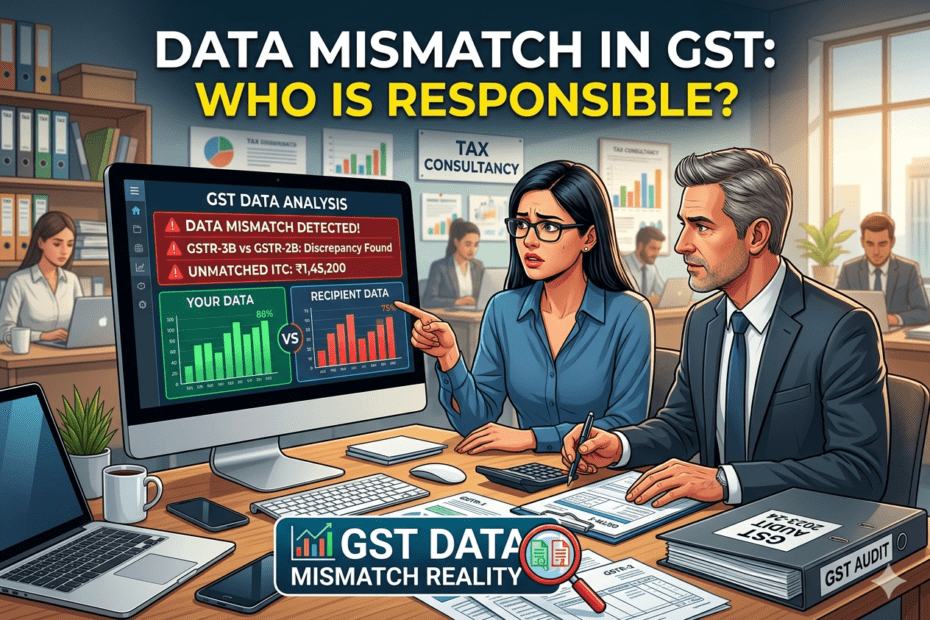
3. Frequent ITC Mismatches
Mismatch between:
GSTR-1
GSTR-3B
GSTR-2B
can lead to:
Notices
ITC reversal
Penalties
4. Complex Rules and Frequent Changes
GST laws related to ITC are constantly evolving, making compliance difficult. Businesses must:
Stay updated
Adapt quickly
5. High Litigation Risk
ITC is one of the most litigated areas under GST. Disputes arise due to:
Interpretation differences
Technical errors
Documentation gaps
6. Blocking of ITC
Under certain provisions, authorities can block ITC if they suspect fraud, even before final determination. This impacts liquidity.
Tax Credit Reality: Ground-Level Challenges
The real Tax Credit Reality lies in how businesses experience ITC on a daily basis.
1. Compliance Burden
Businesses must:
Reconcile data regularly
Track supplier compliance
Maintain detailed records
2. Technology Dependence
GST compliance relies heavily on digital systems. Issues like:
Portal glitches
Data errors
can create complications in ITC claims.
3. Cash Flow Risks
When ITC is denied or delayed, businesses must:
Pay tax in cash
Face liquidity issues
Common Reasons for ITC Rejection
Understanding these reasons is key to managing the Tax Credit Reality:
Incorrect invoice details
Supplier not filing returns
Mismatch in GST returns
Ineligible ITC claims
Delayed filing
Avoiding these mistakes can significantly reduce ITC-related issues.
Impact of ITC Issues on Businesses
1. Financial Strain
Blocked or reversed ITC increases tax liability.
2. Operational Disruptions
Time spent on compliance reduces focus on business activities.
3. Increased Cost
Legal and professional fees add to expenses.
4. Reduced Trust in System
Frequent issues create frustration among taxpayers.
Government Measures to Improve ITC System
To address challenges, the government has introduced:
1. GSTR-2B System
Provides a static statement for ITC claims, improving accuracy.
2. E-Invoicing
Reduces fake invoicing and improves data reliability.
3. Automated Matching
Enhances transparency and reduces manual errors.
4. Strict Compliance Framework
Ensures accountability across the supply chain.
While these steps are positive, the Tax Credit Reality still reflects gaps between policy and implementation.
How to Avoid ITC Becoming a Trap
Businesses can take proactive steps:
1. Vendor Due Diligence
Work only with compliant and reliable suppliers.
2. Regular Reconciliation
Match data with GSTR-2B before claiming ITC.
3. Maintain Proper Documentation
Ensure all invoices and records are accurate and complete.
4. Timely Filing
Avoid delays in return filing.
5. Seek Expert Guidance
Professional support can help navigate complex rules.
Benefit or Trap: A Balanced View
So, what does the Tax Credit Reality truly indicate?
ITC is a Benefit When:
Compliance is strong
Systems work efficiently
Suppliers are reliable
ITC becomes a Trap When:
Rules are complex
Data mismatches occur
Supplier defaults impact claims
In essence, ITC is both a powerful benefit and a potential risk—depending on how it is managed.
Future of Input Tax Credit in India
The future of ITC looks promising with:
1. Increased Automation
Reducing manual intervention and errors.
2. Better Data Integration
Improving accuracy and reducing mismatches.
3. Simplified Compliance
Government efforts to ease the burden on businesses.
4. Stronger Enforcement
Reducing fraud and improving system credibility.
These developments can reshape the Tax Credit Reality in a positive direction.
Conclusion
The Tax Credit Reality presents a dual picture. On one hand, ITC is a cornerstone of the GST system, offering significant financial benefits and promoting transparency. On the other hand, its complex rules and compliance requirements can turn it into a challenging process for businesses.
The key lies in striking a balance—ensuring that ITC remains a tool for growth rather than a compliance burden. Businesses must adopt best practices, stay informed, and leverage professional expertise to navigate this landscape effectively.
Ultimately, Input Tax Credit is not inherently a trap—it becomes one only when compliance gaps and systemic issues come into play.
SEO Keywords (For Ranking Boost)
Tax Credit Reality, Input Tax Credit India, ITC issues, ITC mismatch, GST ITC problems, ITC compliance, GST input credit rules, ITC rejection reasons, GST compliance India.


