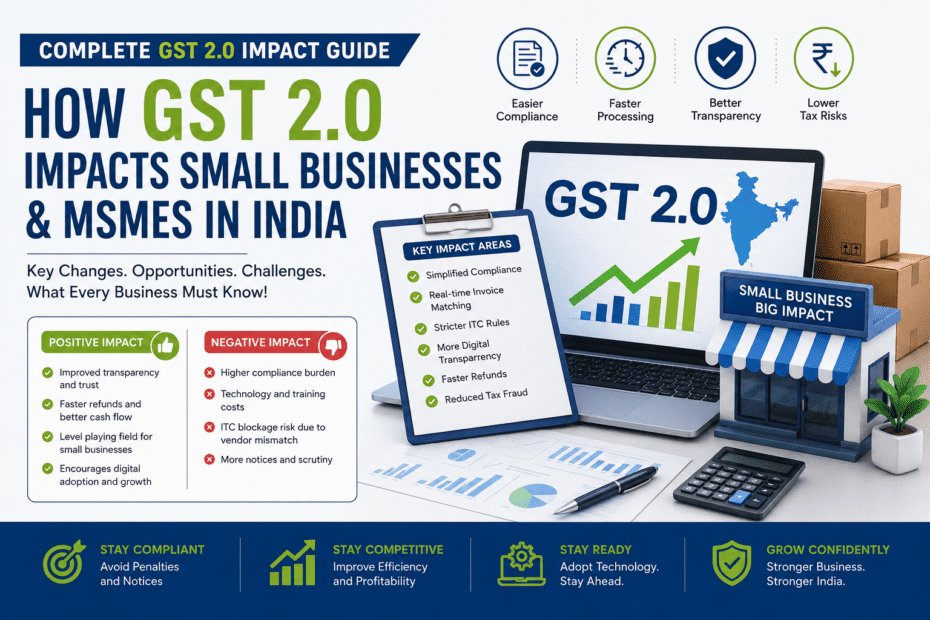
India’s taxation system is entering a new phase with the introduction of GST 2.0 reforms. The government is focusing on stronger digital compliance, automated return matching, stricter invoice verification, and revised tax structures. For small businesses and MSMEs, these reforms can create both opportunities and challenges. This Complete GST 2.0 Impact Guide explains everything business owners need to know about GST 2.0, including compliance updates, operational changes, benefits, risks, and strategies for adapting successfully.
If you own a startup, shop, manufacturing unit, trading business, or service company, understanding this Complete GST 2.0 Impact Guide is extremely important for staying compliant and competitive in 2026.
What Is GST 2.0?
GST 2.0 refers to the next stage of GST reforms introduced to improve tax transparency, reduce fake invoicing, strengthen compliance monitoring, and simplify return filing processes. The government aims to create a more technology-driven GST ecosystem with real-time invoice matching and AI-based compliance tracking.
This Complete GST 2.0 Impact Guide helps MSMEs understand how these reforms may affect:
GST return filing
Input Tax Credit (ITC)
E-invoicing
Vendor management
Working capital
Tax audits
Business cash flow
GST 2.0 is expected to reshape how businesses manage taxation in India.
Why GST 2.0 Matters for Small Businesses & MSMEs
Small businesses and MSMEs form the backbone of the Indian economy. However, many MSMEs still struggle with:
Delayed GST filing
ITC mismatches
Lack of accounting automation
Vendor compliance issues
Cash flow problems
The reforms explained in this Complete GST 2.0 Impact Guide are designed to improve efficiency but may also increase compliance pressure for businesses that are not digitally prepared.
Key Changes Under GST 2.0
1. Real-Time Invoice Matching
One of the biggest updates covered in this Complete GST 2.0 Impact Guide is real-time invoice verification. Under GST 2.0:
Seller invoices will automatically match buyer records
Fake invoices will become easier to detect
ITC claims may be blocked instantly if mismatches occur
This means businesses must ensure accurate invoice generation and timely filing.
2. Stronger ITC Verification Rules
Input Tax Credit remains one of the most important areas for MSMEs. According to this Complete GST 2.0 Impact Guide, businesses may face:
Stricter ITC matching
Automated ITC reversals
Higher scrutiny of vendor compliance
Faster GST notices for incorrect ITC claims
MSMEs must regularly reconcile GSTR-2B with their purchase records.
3. Expanded E-Invoicing Requirements
E-invoicing is likely to become mandatory for more businesses under GST 2.0. This Complete GST 2.0 Impact Guide highlights that even medium-sized businesses may soon fall under mandatory e-invoice rules.
Benefits include:
Faster invoice validation
Reduced tax fraud
Automated reporting
Better accounting transparency
However, small businesses may need software upgrades and employee training.
Positive Impact of GST 2.0 on MSMEs
1. Better Transparency
This Complete GST 2.0 Impact Guide explains that GST 2.0 will reduce tax fraud and improve transparency in business transactions.
Businesses with proper records may benefit from:
Faster refunds
Reduced disputes
Easier audit processes
Better credibility with banks and investors
2. Faster GST Refund Processing
Automation may help genuine taxpayers receive GST refunds faster. MSMEs involved in exports or high ITC transactions could benefit significantly from the reforms discussed in this Complete GST 2.0 Impact Guide.
3. Reduced Manual Errors
With automated reconciliation and AI-based compliance checks, businesses can reduce human filing mistakes. This Complete GST 2.0 Impact Guide highlights how accounting software integration may simplify GST management.
4. Stronger Digital Ecosystem
GST 2.0 encourages MSMEs to adopt:
Cloud accounting
Digital invoicing
Automated reconciliation
Tax compliance software
Long term, this digital transformation may improve operational efficiency.
Negative Impact of GST 2.0 on Small Businesses
While GST 2.0 offers advantages, this Complete GST 2.0 Impact Guide also highlights major challenges.
1. Increased Compliance Burden
Many MSMEs still use manual bookkeeping systems. Under GST 2.0:
Filing mistakes may trigger instant notices
Invoice mismatches could block ITC
More frequent reconciliations may be required
This can increase compliance pressure on smaller businesses.
2. Higher Technology Costs
Businesses may need:
New accounting software
GST automation tools
E-invoicing systems
Employee training
For smaller enterprises, these additional costs can create financial stress.
3. Vendor Dependency Risks
According to this Complete GST 2.0 Impact Guide, your ITC may depend heavily on whether your vendors file returns correctly. If suppliers fail to comply:
ITC may be denied
Cash flow may suffer
Businesses may face notices
This increases the importance of choosing GST-compliant vendors.
4. More GST Notices
AI-driven monitoring can increase notice generation for:
Wrong ITC claims
Return mismatches
Delayed filing
Unusual transactions
Businesses that fail to adapt may face penalties under GST 2.0.
How MSMEs Can Prepare for GST 2.0
1. Upgrade Accounting Systems
This Complete GST 2.0 Impact Guide strongly recommends using:
GST-enabled accounting software
Automated invoicing systems
Real-time reconciliation tools
Manual bookkeeping may become risky under stricter GST monitoring.
2. Conduct Monthly Reconciliations
Businesses should regularly match:
GSTR-1
GSTR-3B
GSTR-2B
Sales registers
Purchase registers
Frequent reconciliation reduces compliance risk.
3. Verify Vendor Compliance
Before purchasing goods or services:
Check vendor GST filing status
Monitor return filing consistency
Avoid risky suppliers
This reduces the chance of ITC blockage.
4. Train Employees
GST 2.0 will require stronger accounting knowledge. Staff should understand:
Invoice rules
GST return filing
E-invoicing
ITC matching
Training improves accuracy and reduces penalties.
Industries Most Affected by GST 2.0
This Complete GST 2.0 Impact Guide predicts higher impact on:
Manufacturing units
E-commerce sellers
Traders & wholesalers
Export businesses
Logistics companies
Service providers
These industries handle large invoice volumes and complex ITC structures.
GST 2.0 and Working Capital Impact
One important topic in this Complete GST 2.0 Impact Guide is working capital management.
Blocked ITC or delayed vendor compliance can:
Reduce available cash flow
Increase borrowing dependence
Delay expansion plans
Businesses should maintain emergency cash reserves and monitor vendor filing closely.
Compliance Checklist for MSMEs Under GST 2.0
Use this Complete GST 2.0 Impact Guide checklist for better compliance:
✔ File GST returns before due dates
✔ Use GST-compliant invoices
✔ Match ITC monthly
✔ Track vendor filing status
✔ Maintain digital records
✔ Generate e-invoices where required
✔ Keep proper audit documentation
✔ Use automated accounting software
✔ Train accounting teams regularly
✔ Respond quickly to GST notices
Future of GST 2.0 in India
The future of GST compliance will likely become:
Fully digital
AI-driven
Automated
Real-time monitored
This Complete GST 2.0 Impact Guide suggests that businesses adopting technology early will gain competitive advantages.
Government reforms may eventually simplify compliance for honest taxpayers while increasing pressure on fraudulent practices.
Conclusion
GST 2.0 represents a major shift in India’s tax compliance system. While the reforms can improve transparency, reduce fraud, and speed up processes, they may also create challenges for small businesses and MSMEs that are not digitally prepared.
This Complete GST 2.0 Impact Guide highlights both the positive and negative effects of GST 2.0 and provides practical strategies to help businesses stay compliant. By upgrading systems, training teams, improving reconciliation processes, and maintaining accurate records, MSMEs can successfully adapt to the changing GST environment.
Businesses that prepare early will not only avoid penalties but also improve operational efficiency and long-term growth opportunities under GST 2.0.


