Introduction
The Goods and Services Tax (GST) has significantly transformed India’s taxation landscape by bringing multiple indirect taxes under one unified system. However, GST is not static—it evolves continuously through notifications, amendments, and policy changes.
For businesses, professionals, and taxpayers, keeping up with these changes is not optional—it is essential. This is where the concept of GST Updates Power becomes highly relevant. Understanding the latest updates allows businesses to stay compliant, avoid penalties, and make better financial decisions.
In this blog, we will explore the latest GST updates, their practical implications, and how businesses can effectively adapt to them.
Why Staying Updated with GST is Crucial
GST updates directly impact:
Tax liability
Input Tax Credit (ITC)
Compliance requirements
Cash flow management
Ignoring updates can lead to:
Heavy penalties
GST notices
Business disruptions
Using GST Updates Power, businesses can turn compliance into a competitive advantage.
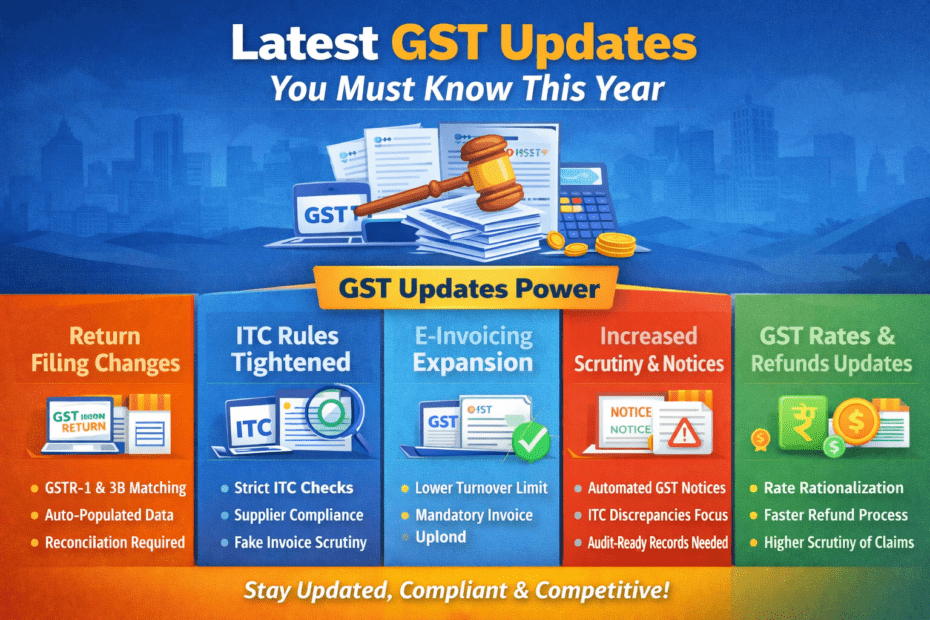
1. Strengthening of GST Return Filing System
What Has Changed?
The GST return filing system has become stricter and more automated. Authorities now rely heavily on data matching between different returns.
Key Updates
Auto-population of data from GSTR-2B
Tighter reconciliation requirements
Real-time validation checks
Impact on Businesses
Errors are quickly detected
Increased risk of mismatch notices
Need for accurate and timely filing
👉 GST Updates Power Insight: Regular reconciliation is no longer optional—it’s mandatory.
2. Input Tax Credit (ITC) Rules Becoming More Strict
ITC is one of the biggest benefits under GST, but it is also the most scrutinized area.
Latest Updates
ITC allowed only if reflected in GSTR-2B
Vendor compliance directly impacts ITC
Strict checks on fake invoices
Practical Impact
Businesses must track supplier filings
ITC claims must be verified
Increased chances of ITC reversal
👉 This makes ITC management a core part of GST Updates Power.
3. Expansion of E-Invoicing System
E-invoicing continues to expand to include more businesses.
Recent Changes
Lower turnover threshold for applicability
Mandatory invoice reporting
Integration with GST returns
Impact
Reduction in manual errors
Better tracking by authorities
Increased compliance requirements
4. Rise in GST Notices and Automated Scrutiny
GST authorities are now using advanced data analytics to identify discrepancies.
Key Developments
Automated notices for mismatches
Increased scrutiny of ITC claims
Faster detection of errors
Impact
Businesses must maintain accurate records
Even small mistakes can trigger notices
Documentation becomes critical
👉 GST Updates Power Tip: Always double-check returns before submission.
5. Updates in GST Registration Process
What’s New?
Mandatory Aadhaar authentication in many cases
Physical verification in suspicious cases
Faster rejection of incorrect applications
Impact
Increased transparency
Reduced fake registrations
Need for accurate documentation
6. Changes in GST Refund Mechanism
Refunds remain a key concern, especially for exporters.
Latest Updates
Faster processing for compliant taxpayers
Increased scrutiny of refund claims
Enhanced verification procedures
Impact
Delays still possible if documentation is weak
Accuracy is crucial
Proper filing improves approval chances
7. E-Way Bill System Enhancements
Key Updates
Integration with GST return data
Improved tracking of goods movement
Stricter compliance checks
Impact
Reduced tax evasion
Increased accountability
Better transparency in logistics
8. GST Rate Rationalization
The government periodically reviews GST rates.
Recent Trends
Simplification of tax slabs
Reduction in rates for essential goods
Adjustment for specific industries
Impact
Changes in pricing strategy
Impact on profit margins
Need to update billing systems
9. Composition Scheme Updates
What’s New?
Adjustments in turnover limits
Simplified compliance
Restrictions on interstate supply remain
Impact
Useful for small businesses
Limited benefits compared to regular GST
10. Increased Use of Technology in GST
GST is becoming more technology-driven.
Key Developments
AI-based fraud detection
Data analytics for compliance
Automation of processes
Impact
Faster detection of errors
Reduced manual intervention
Higher compliance expectations
👉 Technology is a major driver of GST Updates Power.
Real-Life Example of GST Updates Impact
Case: ITC Mismatch Issue
A business claimed ITC of ₹2,00,000, but only ₹1,70,000 was reflected in GSTR-2B.
Outcome:
GST notice issued
₹30,000 ITC reversed
Interest applied
Lesson:
Regular reconciliation and vendor follow-up are essential.
How Businesses Can Adapt to GST Updates
1. Stay Informed
Regularly check GST notifications and updates.
2. Maintain Proper Records
Accurate documentation reduces errors.
3. Perform Monthly Reconciliation
Match all GST returns consistently.
4. Use Automation Tools
Reduce manual errors and save time.
5. Consult Professionals
Expert advice ensures compliance.
Common Mistakes Businesses Make
Ignoring new GST rules
Delaying implementation
Incorrect ITC claims
Poor record maintenance
Avoiding these mistakes is key to leveraging GST Updates Power.
Challenges in Adapting to GST Updates
Frequent changes
Complex compliance requirements
Technical issues on GST portal
Lack of awareness among small businesses
Future of GST in India
The GST system is moving towards:
Greater automation
Real-time compliance
Simplified return filing
Reduced tax evasion
These changes will further strengthen the role of GST Updates Power in business success.
Benefits of Staying Updated
Avoid penalties and notices
Improve financial planning
Ensure smooth operations
Build business credibility
Conclusion
GST updates are not just regulatory changes—they directly influence how businesses operate, manage finances, and comply with tax laws.
This blog clearly shows that GST Updates Power is about staying proactive, informed, and prepared. Businesses that adapt quickly to changes can avoid risks and gain a competitive edge.
The formula for success is simple:
👉 Stay updated
👉 Stay compliant
👉 Stay ahead
By embracing the power of GST updates, businesses can turn compliance into an opportunity for growth.
SEO Keywords (For Ranking Boost)
GST Updates Power, latest GST updates India, GST changes 2026, GST rules update, GST compliance India, GST ITC updates, GST filing changes, GST law amendments India.


