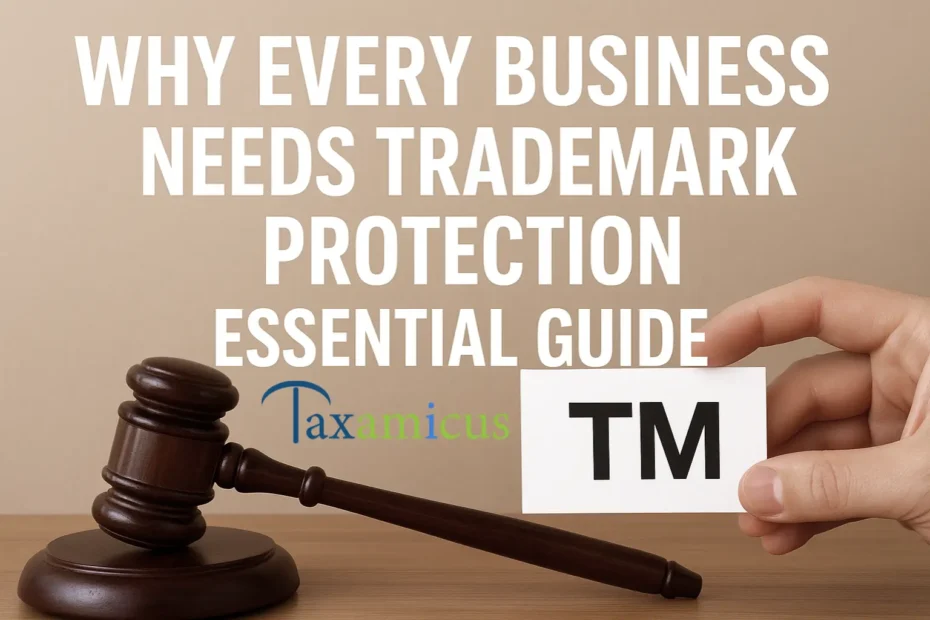
In today’s competitive market, your brand is much more than just a name or a logo. It is your identity, reputation, and the promise you make to your customers. Whether your business is a startup, an SME, or a growing enterprise, the need to protect this identity is critical. This is where Trademark Protection becomes essential.
This blog explains Why Every Business Needs Trademark Protection, how trademarks work, how they safeguard your brand, and the steps involved in trademark registration, especially for businesses operating in India.
What Is a Trademark?
A Trademark is a legal protection granted to unique brand identifiers such as:
Business Name
Logo or Symbol
Tagline or Slogan
Product Name
Packaging Style (Trade Dress)
Distinctive Sounds or Colors (In some cases)
These elements distinguish your products or services from others in the marketplace. When registered, a trademark gives you exclusive rights to use those brand identifiers.
Why Every Business Needs Trademark Protection
Many businesses overlook trademarks in their initial stages, assuming it is necessary only for big brands. However, small and medium businesses are actually more vulnerable to brand theft or misuse.
Here are the key reasons why every business needs trademark protection:
1. To Protect Your Brand Identity
Your brand represents your credibility in the market. Without trademark protection, any competitor can copy your name or logo, confusing customers and damaging your reputation.
For example:
If your business name becomes popular locally, another business might adopt a similar or identical name. Without a registered trademark, you may have no legal grounds to stop them.
Trademark protection ensures that your brand identity is exclusively yours.
2. To Prevent Competitors from Using Similar Branding
In competitive industries, copycat branding is common. Competitors may create similar logos, packaging, or even product names to mislead customers. This is known as passing off.
With trademark protection, you have the power to take legal action to stop such misuse. This not only safeguards your brand but also maintains customer trust and loyalty.
3. Builds Recognition and Customer Trust
Consumers trust brands that are recognizable and consistent. When customers see a familiar logo or brand name, they associate it with:
Quality
Service Experience
Reputation
Trademark registration adds authenticity and credibility to your brand. It signals to consumers that your business is legitimate and professional.
4. Provides Legal Protection and Enforcement Rights
A registered trademark provides exclusive ownership rights under law. If someone tries to use your brand name or logo without permission, you can:
Issue a legal notice
Seek financial compensation
Get the infringing brand name canceled or removed
Without trademark registration, legal protection is much weaker and sometimes not enforceable.
5. Helps Build a Valuable Business Asset
A trademark becomes a valuable intangible asset over time. Well-known trademarks often have significant financial value — sometimes even more than physical assets.
This asset can be:
Licensed
Franchised
Sold
Transferred
Used for Business Valuation or Fundraising
For example:
Brands like Nike, Apple, or Tata have trademark portfolios that are worth billions.
6. Prevents Domain and Social Media Name Conflicts
As businesses expand online, domain and social media brand name conflicts are common. With trademark registration, you can claim ownership of your brand on:
Websites
Social Media Pages
E-Commerce Platforms
Digital Marketplaces
This avoids situations where someone else registers your business name online before you.
7. Supports Expansion and Scaling
Trademarks make business expansion smoother. Whether you’re launching:
New products
Franchises
Branch offices
International operations
Trademark protection ensures that your brand remains uniquely yours across different markets.
What Happens If You Do NOT Register a Trademark?
Failing to protect your brand can lead to:
Loss of brand identity
Legal disputes and financial loss
Customer confusion and mistrust
Competitors using your brand reputation for profit
Difficulty expanding into new regions or markets
In some cases, you may even be forced to change your business name, which is costly and damages brand continuity.
Types of Trademark Symbols and Their Meaning
| Symbol | Meaning | When to Use |
|---|---|---|
| ™ | Trademark applied but not registered | When application is filed |
| ® | Registered Trademark | After registration is approved |
| ℠ | Service Mark | Used for service-based businesses |
Trademark Registration Process in India: Step-by-Step
Here is how businesses in India can register a trademark:
Step 1: Trademark Search
Check if your brand name/logo is unique.
Step 2: Prepare Application
Submit required documents such as:
Business Identity Proof
Logo/Wordmark
Power of Attorney (if using an agent)
Step 3: File Trademark Application
Application is filed with the Trademark Registry.
Step 4: Examination and Approval
Registry examines whether your trademark qualifies.
Step 5: Publication in Trademark Journal
Trademark is made public for opposition.
Step 6: Registration and Certificate Issued
If no objections arise, your trademark is registered and protected for 10 years.
Documents Required for Trademark Registration
Aadhaar and PAN of the applicant
Logo or wordmark file
Business Incorporation Certificate (if applicable)
Power of Attorney (Form TM-48)
Signed authorization documents
Cost of Trademark Registration in India
| Applicant Type | Government Fee (Per Class) |
|---|---|
| Individual / Proprietor / Startup / MSME | approx. INR 4,500 – 5,000 |
| Company / LLP / Partnership | approx. INR 9,000 – 10,000 |
Professional fees may vary based on service provider.
How Long Does Trademark Protection Last?
Trademark protection lasts for 10 years and can be renewed indefinitely, as long as the business continues to use it and renews before expiration.
Conclusion: Why Every Business Needs Trademark Protection
Your brand is one of your most valuable assets, and protecting it is essential for long-term success. This is why Every Business Needs Trademark Protection — not just large corporations but small businesses, startups, local brands, and online sellers as well.
Trademark protection:
Safeguards your identity
Prevents misuse or imitation
Builds trust and recognition
Enhances business valuation
Supports growth and expansion
Registering your trademark today can save you from costly legal disputes and ensure that your brand remains uniquely yours.
Our GST Services

All E-commerce Tax services
E-commerce tax services help online sellers navigate GST registration, compliance, return filing, TCS management, tax planning, and audits, ensuring efficient tax management and legal compliance.
GST Filing
GST filing is the process of submitting tax returns to the government, detailing sales, purchases, and taxes paid or collected, ensuring compliance with GST laws.

GST Registration
GST registration is the process where businesses obtain a GSTIN from the government, allowing them to collect taxes, claim input tax credits, and comply with GST laws.


