

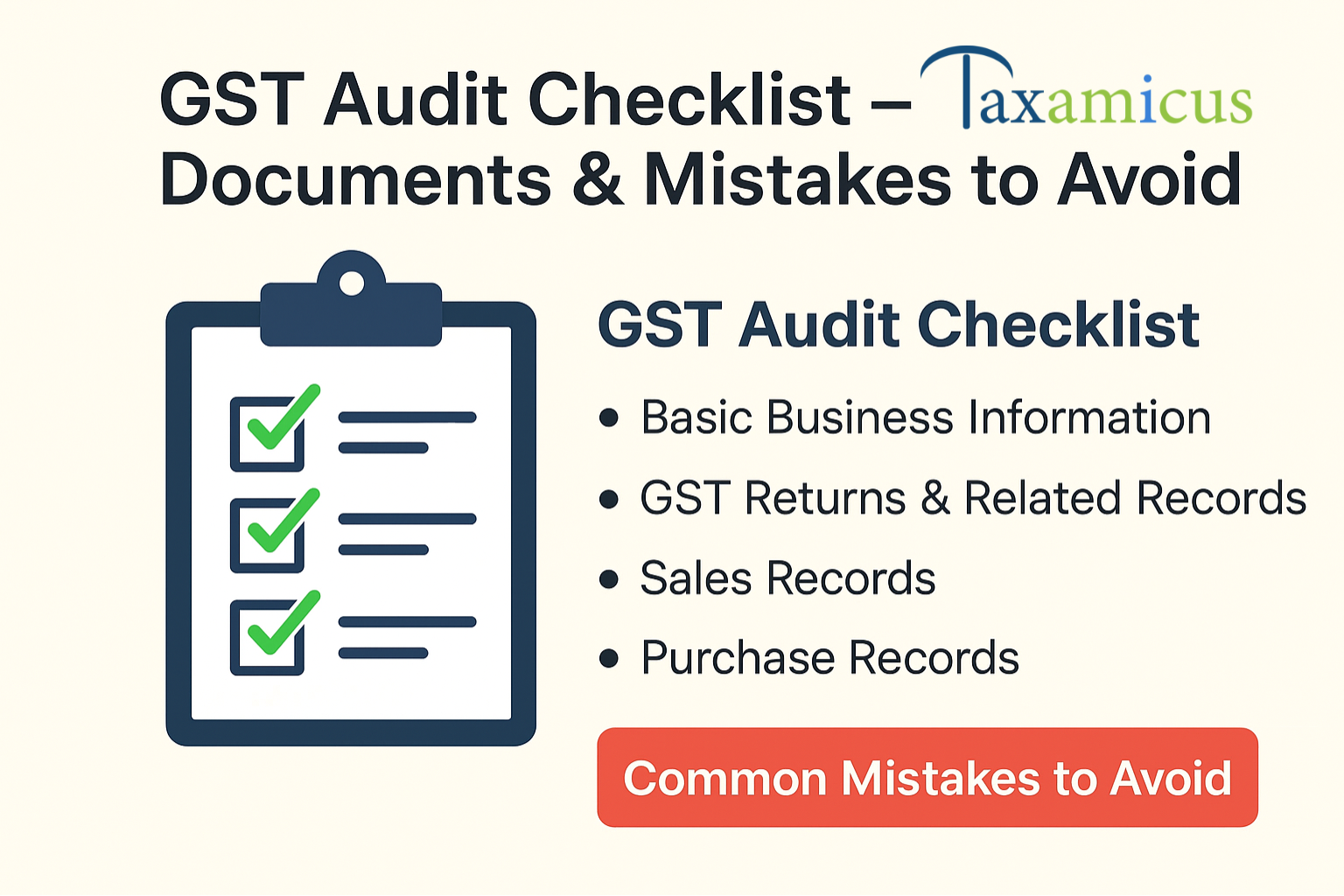
GST Audit Checklist – Documents & Mistakes to Avoid
Running a business under the GST system requires timely compliance, accurate documentation, and transparent reporting. One of the most crucial parts of maintaining compliance is being prepared for a GST audit. Whether your business crosses the turnover threshold or you’ve been selected for audit, following the right GST Audit Checklist ensures smooth verification and reduces the chances of penalties.
This blog guides you through the essential documents, common mistakes to avoid, and practical tips to help you confidently navigate the GST audit process.
What Is a GST Audit?
A GST audit is a process where GST authorities examine the records, returns, and financial statements of a business to ensure accuracy and compliance. The purpose of the audit is to verify:
Correctness of turnover declared
Taxes paid and refunds claimed
Input Tax Credit (ITC) availed
Compliance with GST laws
Not being audit-ready can lead to penalties, interest, and unnecessary scrutiny.
Why Is a GST Audit Checklist Important?
A clear GST Audit Checklist helps businesses:
Track required documents
Maintain organized financial records
Avoid errors in returns
Respond effectively during audit
Reduce risks of penalties
Having everything prepared saves time for both business owners and auditors.
GST Audit Checklist – Complete List
Below is the comprehensive GST Audit Checklist your business should follow to stay audit-ready.
1. Basic Business Information
Keep the foundational documents organized and updated:
GST Registration Certificate
PAN and Incorporation documents
Partnership deed / LLP agreement / MOA / AOA
Principal & additional place of business proof
Authorized signatory details
These documents verify the legal identity of your business.
2. GST Returns & Related Records
Ensure you have copies of all monthly, quarterly, and annual returns:
GSTR-1 (Outward supplies)
GSTR-3B (Summary return)
GSTR-2A/2B (ITC statement)
GSTR-9 (Annual return)
GSTR-9C (Reconciliation statement), if applicable
Also maintain:
E-invoices (if applicable)
E-way bills
Payment challans (GST PMT-06)
These records show that your GST filings match actual business activity.
3. Sales Records
Sales-related documents required during an audit:
Tax invoices
Debit & credit notes
Export invoices
Sales registers
B2B & B2C sales summary
Make sure invoice numbers follow proper sequence and comply with GST rules.
4. Purchase Records
Purchases directly impact Input Tax Credit (ITC). Keep the following:
Purchase invoices
Supplier-wise ITC summary
Goods received notes (GRN)
Purchase register
Import bills of entry
Cross-check that ITC claimed is reflected in GSTR-2B.
5. Input Tax Credit Documentation
ITC is the most scrutinized part of any audit. Prepare:
Proof of goods/services usage for business
Reversal details under Rules 42 & 43
ITC mismatch reports
ITC ledger from GST portal
Authorities ensure that ITC is claimed only if it is eligible and properly documented.
6. Books of Accounts
Maintaining proper books is part of the GST Audit Checklist:
Sales register
Purchase register
Expense ledger
Inventory records
Input & output tax ledgers
Cash & bank books
Books must match the figures declared in GST returns.
7. Financial Statements
Keep the following ready for the audit year:
Balance sheet
Profit & loss statement
Trial balance
Stock valuation reports
Audit report by Chartered Accountant
These help auditors cross-verify your financial performance with GST filings.
8. Stock & Inventory Records
GST officers often analyze inventory movement. Keep:
Stock registers
Opening & closing stock
Production reports (for manufacturing units)
Waste & scrap records
Mismatch in stock data can trigger further investigation.
Common Mistakes to Avoid During GST Audit
Even well-organized businesses make errors in GST compliance. Here are the most common mistakes you should avoid:
1. Claiming Ineligible ITC
Some businesses mistakenly claim ITC on:
Personal expenses
Goods/services blocked under Section 17(5)
Missing or invalid invoices
Supplier not filing returns
This is one of the top reasons for audit objections.
2. Mismatch Between Books and GST Returns
If your books show different figures than GSTR-1, GSTR-3B, or financial statements, it raises immediate red flags.
Regular reconciliation prevents this issue.
3. Incorrect Classification or HSN Code
Choosing the wrong HSN/SAC code can lead to:
Wrong tax rate
Notices and penalties
Refund rejections
Always verify codes applicable to your products/services.
4. Missing E-Way Bills
For goods movement above the threshold, e-way bills are compulsory. Missing e-way bills result in penalties and detention of goods.
5. Not Maintaining Proper Invoices
Common invoice errors include:
Missing GSTIN
Wrong address
Incorrect tax calculation
Duplicate invoice numbers
A valid invoice must follow GST rules strictly.
6. Late Filing of Returns
Delays in GSTR-3B or GSTR-1 filing attract:
Late fees
Interest
ITC blockage
Consistency is key to smooth compliance.
7. Not Reconciling ITC with GSTR-2B
Authorities now strictly verify ITC with GSTR-2B. If it’s not reflected there, it may be disallowed.
How to Prepare for a GST Audit — Practical Tips
Here are simple steps to stay fully prepared:
✔ Maintain digital and physical records
✔ Reconcile books monthly
✔ Verify supplier compliance for ITC
✔ Follow proper invoicing format
✔ Update HSN/SAC codes
✔ Keep communication with CA or tax consultant clear
✔ Review returns before final submission
✔ Keep backup copies of all GST documents
Audit becomes easier when your records are clean and updated.
Conclusion
A GST audit may seem stressful, but with a proper GST Audit Checklist, it becomes a manageable process. Preparing accurate documents, correcting mistakes early, and following compliance rules not only prevent penalties but also strengthen your business’s tax transparency.
Staying organized and aware is the best way to ensure a smooth GST audit experience.
Our GST Services

All E-commerce Tax services
E-commerce tax services help online sellers navigate GST registration, compliance, return filing, TCS management, tax planning, and audits, ensuring efficient tax management and legal compliance.
GST Filing
GST filing is the process of submitting tax returns to the government, detailing sales, purchases, and taxes paid or collected, ensuring compliance with GST laws.

GST Registration
GST registration is the process where businesses obtain a GSTIN from the government, allowing them to collect taxes, claim input tax credits, and comply with GST laws.


