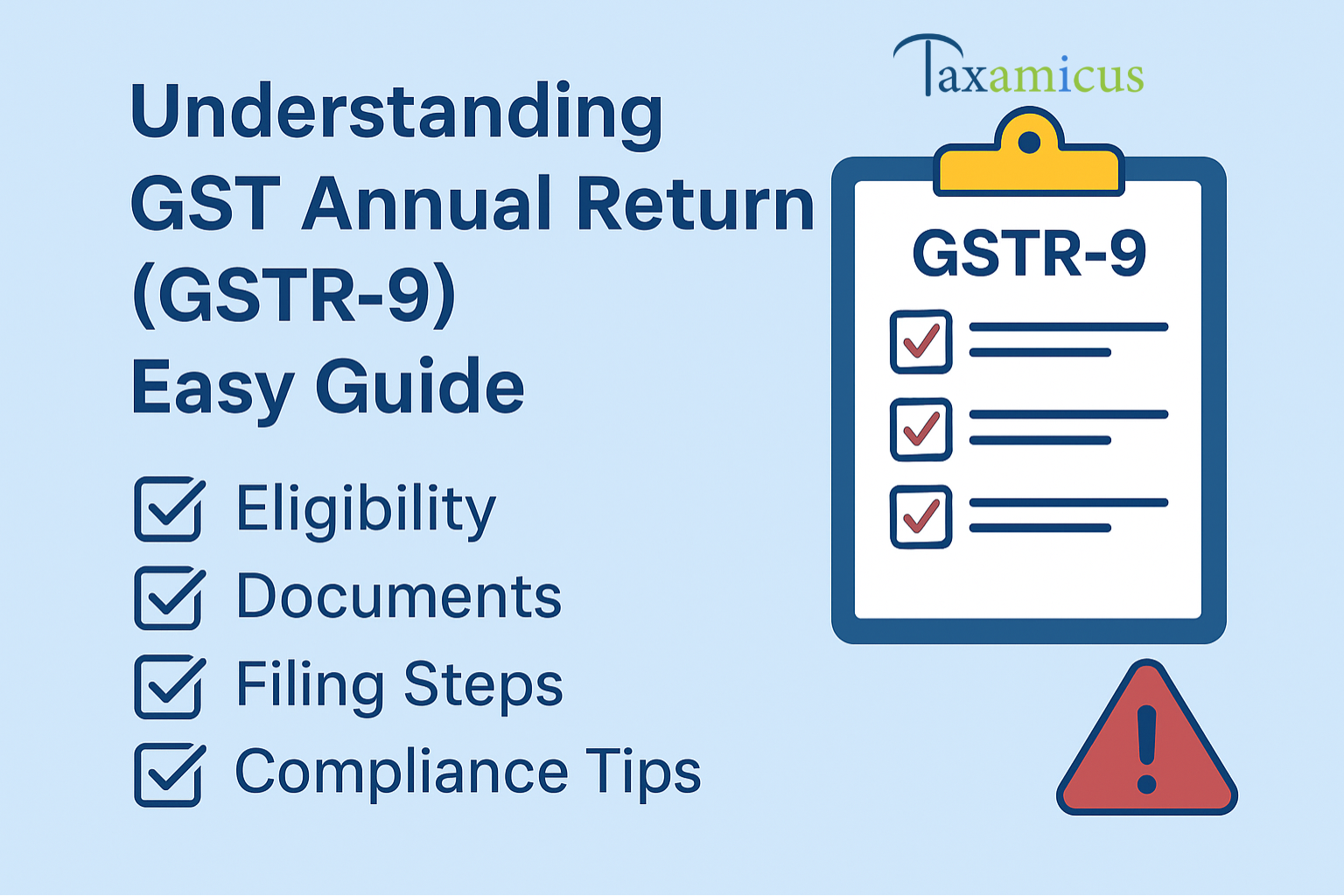
Every registered business under GST must follow proper annual compliance to avoid penalties and maintain clean records. One of the most important components of GST compliance is filing and understanding GST Annual Return, known as GSTR-9. Although the return may appear lengthy and complicated, a clear understanding of its structure, purpose, and filing process makes it much simpler.
In this easy guide, you will learn everything about GSTR-9— what it is, who must file it, what documents are required, how to file it correctly, common mistakes, and how a GST Audit Checklist can help you stay fully compliant.
What is GSTR-9?
Annual return that every GST-registered taxpayer (except special categories) must file once a year.
It includes consolidated details of:
-
Outward supplies (sales)
-
Inward supplies (purchases)
-
Input Tax Credit (ITC) claimed
-
Tax paid
-
Refunds received
-
Demands and penalties
The intent of GSTR-9 is to summarize the entire year’s activities, ensuring accuracy between monthly/quarterly returns and actual books of accounts.
Who Should File GSTR-9?
The following taxpayers must file GST annual return:
-
Regular taxpayers registered under GST
-
SEZ units and SEZ developers
-
E-commerce sellers (if registered normally)
However, the following do NOT need to file GSTR-9:
-
Composition scheme taxpayers (They file GSTR-9A)
-
Casual taxable persons
-
Non-resident taxable persons
-
Input Service Distributors (ISD)
Types of GSTR-9 Forms
GST provides different annual return formats:
1. GSTR-9
For all regular taxpayers.
2. GSTR-9A
For composition scheme taxpayers (no longer applicable for new years).
3. GSTR-9C
A reconciliation statement filed when turnover crosses the prescribed limit.
It must be certified by a Chartered Accountant or Cost Accountant.
Why Is GSTR-9 Important?
Filing GST annual return is mandatory and ensures:
-
Accuracy in monthly/quarterly returns
-
Reconciliation of ITC claimed vs. eligible
-
Proper review of GST payments
-
Strong documentation in case of departmental scrutiny
-
Penalty prevention
For businesses, GST annual return acts as a year-end compliance summary and is vital for transparent record-keeping.
Documents Required for Filing GSTR-9
To file GST annual return smoothly, gather the following documents:
1. GST Registration & Basic Business Details
-
GSTIN
-
Legal trade name
-
Principal place of business details
-
Additional place of business (if any)
2. Monthly/Quarterly GST Returns
Keep copies of:
-
GSTR-1 (Sales return)
-
GSTR-3B (Summary return)
-
GSTR-2A/2B (Purchases & ITC)
-
Challan history (PMT-06)
These documents help ensure accuracy between returns and annual data.
3. Sales Records
-
B2B & B2C sales summary
-
Credit notes & debit notes
-
Zero-rated sales
-
Exempt and nil-rated supplies
4. Purchase Records
-
Inward supply invoices
-
Import invoices
-
ITC summary
-
Purchase register
5. Input Tax Credit Details
-
ITC claimed and reversed
-
ITC as per GSTR-2B
-
ITC mismatch report
-
ITC ineligible under section 17(5)
6. Financial Statements
-
Balance sheet
-
Profit & loss statement
-
Trial balance
-
Stock summary
These help reconcile data with GST filings.
7. Reconciliation Files
-
Books vs. GST returns
-
ITC reconciliation
-
Turnover reconciliation
-
Tax liability comparison
A good GST Audit Checklist ensures you don’t miss any of these documents and remain audit-ready.
Step-by-Step Guide to Filing GSTR-9
Follow these simple steps to file GSTR-9 correctly:
Step 1: Login to GST Portal
Visit the official portal and log in using your credentials.
Go to Services → Returns → Annual Return.
Step 2: Select the Financial Year
Choose the relevant year for which you want to file the annual return.
Step 3: Review Auto-filled Data
Parts of GSTR-9 are auto-populated from GSTR-1 and GSTR-3B.
Verify all data carefully before moving ahead.
Step 4: Fill Every Section of GSTR-9
GSTR-9 is divided into 6 parts and 19 tables:
Part I: Basic details
Part II: Outward and inward supplies
Part III: ITC details
Part IV: Tax paid
Part V: Previous year amendments
Part VI: Other information
Cross-check entries with books of accounts to ensure accuracy.
Step 5: Upload & Validate Data
Review mismatches, correct errors, and confirm the return.
Step 6: Pay Additional Liability (If Any)
If there is a short-payment, pay using Form DRC-03.
Step 7: File with DSC or EVC
Complete filing using your Digital Signature Certificate (DSC) or OTP-based Electronic Verification Code (EVC).
Common Mistakes to Avoid While Filing GSTR-9
Despite best efforts, many taxpayers make these mistakes:
1. Not Reconciling with Books of Accounts
Mismatch in turnover or ITC between books and GST returns can lead to notices.
2. Incorrect ITC Reporting
Businesses often:
-
Claim ineligible ITC
-
Forget to reverse ITC
-
Fail to match ITC with GSTR-2B
This is one of the most common reasons for disputes.
3. Missing Amendments
Changes made after March 31 must be reported in the correct section.
4. Not Reviewing Tax Payments
If tax payment is short, additional interest may apply.
5. Relying Only on Auto-filled Data
Auto-populated data may contain errors—manual verification is necessary.
6. Filing at the Last Minute
Last-minute filing increases the chances of errors and portal issues.
How GST Audit Checklist Helps You with GSTR-9 Filing
A structured GST Audit Checklist ensures:
-
Accurate reconciliation
-
Proper documentation
-
Timely correction of errors
-
Reduced audit risks
-
Smooth filing of GSTR-9
-
Strong compliance in case of departmental audit
Using the checklist makes your annual filing process error-free and faster.
Conclusion
Filing the GST Annual Return (GSTR-9) is a crucial part of maintaining compliance under GST law. Although the form looks complicated, understanding its structure, collecting the right documents, and following a clear checklist makes the process simple. With proper preparation and a well-organized GST Audit Checklist, businesses can ensure a smooth, accurate, and stress-free GSTR-9 filing experience.
Our GST Services

All E-commerce Tax services
E-commerce tax services help online sellers navigate GST registration, compliance, return filing, TCS management, tax planning, and audits, ensuring efficient tax management and legal compliance.
GST Filing
GST filing is the process of submitting tax returns to the government, detailing sales, purchases, and taxes paid or collected, ensuring compliance with GST laws.

GST Registration
GST registration is the process where businesses obtain a GSTIN from the government, allowing them to collect taxes, claim input tax credits, and comply with GST laws.


