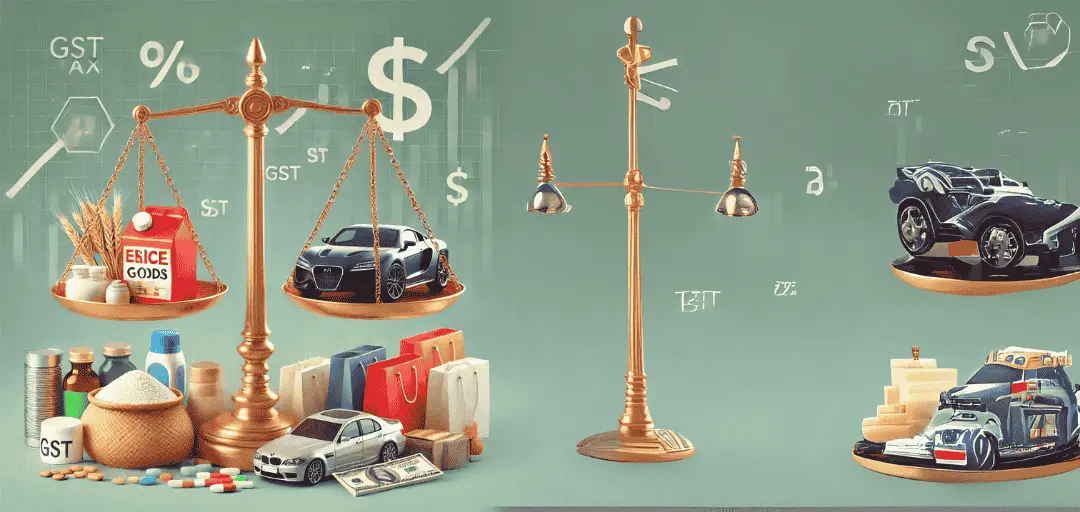
GST on Essential vs. Luxury Goods: Is It Fair to Consumers?
Goods and Services Tax (GST) was introduced in India to create a uniform tax structure, eliminating cascading effects and making taxation more transparent. However, the debate over its fairness, especially concerning GST slab rates on essential and luxury goods, continues to be a topic of discussion. While the intent behind GST is to promote economic growth, the question remains: Are the GST slab rates equitable for consumers across different income levels?
Understanding GST Slab Rates
GST is categorized into different slab rates—5%, 12%, 18%, and 28%. The 5% GST slab rate is primarily for essential goods such as food items, medicines, and public transport services. On the other hand, the 28% GST slab rate applies to luxury goods like high-end cars, aerated drinks, and tobacco products. The mid-range 12% and 18% GST slab rates include products such as processed food, mobile phones, and household appliances.
The classification of products under these slabs significantly impacts the cost burden on consumers. Essentials are kept at a lower tax bracket to ensure affordability, whereas luxury goods attract higher taxation due to their non-essential nature.
The Impact of GST Slab Rates on Essential Goods
Essential goods are daily necessities such as rice, wheat, milk, and certain medicines. The government has categorized these under the 5% GST slab rate, while some are even exempted from GST. This move aims to ensure affordability for lower-income and middle-class consumers.
However, there are concerns about how certain products that are essential for many are taxed under higher GST slab rates. For example:
- Packaged food items attract 5% to 12% GST, increasing costs for consumers.
- Health and hygiene products like sanitary napkins were initially taxed at 12% GST, though later removed after protests.
- Hospital services are exempt, but medical equipment and medicines often fall under 12% to 18% GST slab rates.
Even though essentials are taxed at lower rates, any increase in these slab rates directly affects consumers, making basic goods less affordable for lower-income groups.
The Impact of GST Slab Rates on Luxury Goods
Luxury goods are those considered non-essential and high in value. The 28% GST slab rate applies to products like high-end cars, five-star hotels, and luxury fashion items. Additionally, some luxury items attract a cess over and above the GST slab rate, further increasing their prices.
The rationale behind high taxation on luxury goods is:
- Discouraging non-essential consumption.
- Ensuring that wealthier individuals contribute more to tax revenue.
- Balancing the economy by directing higher revenues toward public welfare.
While this seems fair in theory, critics argue that some items taxed at 28% GST slab rate are not necessarily luxuries but rather aspirational or lifestyle-enhancing products. For instance, air conditioners, branded clothing, and certain furniture items fall under this high tax bracket despite being increasingly common in middle-class households.
Is the GST System Fair to Consumers?
The fairness of GST depends on several factors, including income disparity, affordability, and consumption patterns. Here are some arguments on both sides:
Arguments in Favor of Current GST Slab Rates
- Lower GST slab rates on essential goods protect economically weaker sections.
- High taxation on luxury items ensures that the wealthier population contributes more.
- The system is designed to minimize tax evasion and enhance transparency.
- GST revenue helps fund government initiatives and infrastructure projects.
Arguments Against Current GST Slab Rates
- Some essential goods still attract higher GST slab rates, increasing the financial burden on middle-class consumers.
- The classification of items is sometimes inconsistent—some common household goods are taxed at 18% GST slab rate while other non-essential items are in the 12% GST slab rate.
- Small businesses face compliance challenges due to frequent rate changes and updates.
Possible Reforms for a Fairer GST Structure
To make the GST system more consumer-friendly, policymakers could consider the following changes:
- Review GST slab rates regularly: Essential items that are currently taxed at 12% or 18% GST slab rates could be reconsidered for lower taxation.
- Reclassify certain aspirational goods: Some products categorized as luxury might be more accurately classified as necessary for modern living.
- Reduce compliance burden for small businesses: Simplifying GST filing can help small traders and service providers.
- Increase exemptions for health and education sectors: Reducing GST slab rates on medical equipment and educational services can make healthcare and education more accessible.
Conclusion
GST was introduced to simplify taxation, but its impact on essential vs. luxury goods remains a subject of debate. The current GST slab rates aim to balance affordability and revenue generation, but some inconsistencies still exist. While essential goods enjoy lower tax rates, some necessary items still attract higher taxation. Luxury goods are rightly taxed at higher rates, but certain lifestyle products might need reclassification.
A fairer GST structure would ensure that taxation does not disproportionately affect the middle and lower-income groups while still generating necessary revenue for the government. Reviewing GST slab rates periodically and addressing inconsistencies can help create a more balanced and consumer-friendly taxation system.
Our GST Services

All E-commerce Tax services
E-commerce tax services help online sellers navigate GST registration, compliance, return filing, TCS management, tax planning, and audits, ensuring efficient tax management and legal compliance.
GST Filing
GST filing is the process of submitting tax returns to the government, detailing sales, purchases, and taxes paid or collected, ensuring compliance with GST laws.

GST Registration
GST registration is the process where businesses obtain a GSTIN from the government, allowing them to collect taxes, claim input tax credits, and comply with GST laws.


