Introduction
Every year, millions of taxpayers in India prepare to submit their income tax returns before the government deadline. Understanding the ITR Filing Due Date 2026 is extremely important for individuals, salaried employees, freelancers, and business owners. Filing your return on time helps you avoid penalties and ensures that your financial records remain compliant with tax laws.
Many taxpayers delay their filings until the last moment, which can lead to mistakes, missing documents, or unnecessary stress. By knowing the ITR Filing Due Date 2026 in advance and preparing early, taxpayers can complete the filing process smoothly and efficiently.
In this comprehensive guide, we will explain everything you need to know about the ITR Filing Due Date 2026, including deadlines, penalties, required documents, benefits of filing on time, and useful tips to make the filing process easier.
What Is the ITR Filing Due Date 2026?
The ITR Filing Due Date 2026 refers to the final date by which taxpayers must submit their income tax return for the relevant financial year. The Income Tax Department sets these deadlines so that taxpayers can report their income, calculate tax liability, and claim refunds if applicable.
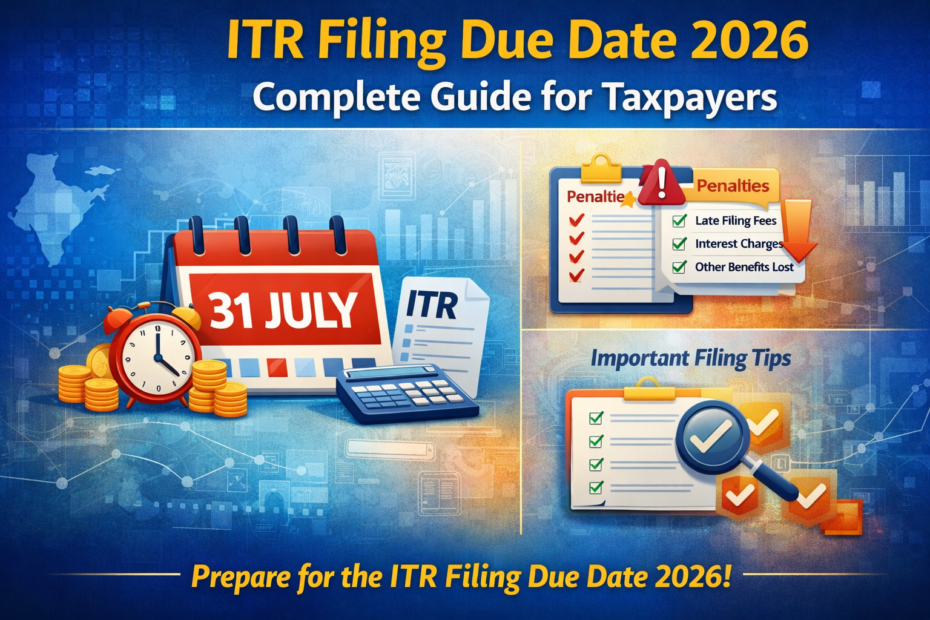
For most salaried individuals and taxpayers whose accounts do not require auditing, the ITR Filing Due Date 2026 is generally expected to be 31 July 2026. However, this date may change or be extended by the government depending on administrative decisions or technical issues.
Different categories of taxpayers may have different deadlines. For example, businesses that require tax audits often have a later due date compared to individual taxpayers. Therefore, understanding your specific category is essential when planning your filing schedule.
Knowing the ITR Filing Due Date 2026 helps taxpayers organize their documents early and avoid last-minute filing problems.
Who Needs to File Income Tax Returns?
Understanding the ITR Filing Due Date 2026 is important for everyone who falls under the income tax filing requirements. In India, several categories of individuals are required to file income tax returns even if they believe their income is not taxable.
You must file an income tax return if:
Your annual income exceeds the basic exemption limit.
You want to claim a refund of excess tax deducted.
You have income from foreign assets or overseas investments.
You are a business owner or self-employed professional.
You have conducted high-value financial transactions.
Even individuals who are not legally required to file returns sometimes choose to do so voluntarily before the ITR Filing Due Date 2026 because ITR records can help with financial planning, loan approvals, and visa applications.
Important Documents Required Before Filing
Before the ITR Filing Due Date 2026, taxpayers should gather all necessary financial documents to ensure accurate reporting of income and deductions. Preparing these documents early helps reduce errors and speeds up the filing process.
Some of the most important documents include:
PAN card and Aadhaar card
Form 16 issued by employers
Bank statements and interest certificates
Investment proof for tax deductions
Capital gains statements for stock or property sales
Form 26AS and AIS tax statement
Collecting these documents well before the ITR Filing Due Date 2026 ensures that taxpayers can correctly report their income and claim eligible deductions without rushing at the last minute.
Penalties for Missing the Deadline
Missing the ITR Filing Due Date 2026 can lead to several consequences. The Income Tax Act imposes penalties and additional charges on taxpayers who fail to file their returns within the prescribed time.
Late Filing Fee
If taxpayers miss the ITR Filing Due Date 2026, they may be required to pay a late filing fee under Section 234F of the Income Tax Act.
Up to ₹5,000 for most taxpayers
₹1,000 if total income is below ₹5 lakh
This penalty can easily be avoided by submitting the return before the ITR Filing Due Date 2026.
Interest on Tax Liability
If there is unpaid tax and the return is filed after the ITR Filing Due Date 2026, interest may be charged on the outstanding tax amount under Section 234A.
Loss of Certain Tax Benefits
Taxpayers who fail to meet the ITR Filing Due Date 2026 may also lose the ability to carry forward certain financial losses, such as capital losses or business losses, which could otherwise be adjusted in future years.
Step-by-Step Process to File ITR Online
Filing income tax returns has become much easier with the introduction of the online income tax portal. Taxpayers can complete the entire process digitally before the ITR Filing Due Date 2026.
Here is a simplified step-by-step guide:
Visit the official income tax e-filing portal.
Log in using your PAN number and password.
Select the correct ITR form based on your income category.
Enter details of income, deductions, and tax payments.
Review the information carefully and submit the return.
Complete e-verification using Aadhaar OTP, bank verification, or digital signature.
Following this process helps ensure that taxpayers submit their returns successfully before the ITR Filing Due Date 2026.
Common Mistakes Taxpayers Should Avoid
Many taxpayers make mistakes while filing their income tax returns. These errors can cause delays in refund processing or even lead to notices from the tax department.
Before submitting your return prior to the ITR Filing Due Date 2026, make sure to avoid these common mistakes:
Entering incorrect personal details such as PAN or bank account number
Not reporting all sources of income
Failing to match income details with Form 26AS or AIS
Selecting the wrong ITR form
Claiming incorrect deductions
Carefully reviewing your return before the ITR Filing Due Date 2026 helps ensure that your tax filing is accurate and compliant.
Benefits of Filing Income Tax Returns Early
Filing income tax returns well before the ITR Filing Due Date 2026 offers several advantages for taxpayers.
Faster Refund Processing
Taxpayers who file early often receive their tax refunds faster because the processing queue is shorter earlier in the filing season.
Better Financial Planning
Submitting your return before the ITR Filing Due Date 2026 helps maintain accurate financial records that can assist in budgeting, investment planning, and tax management.
Easier Loan and Visa Applications
Many financial institutions require income tax returns as proof of income. Filing your return before the ITR Filing Due Date 2026 ensures that you have the necessary documents ready when applying for loans, credit cards, or international visas.
Tips to Prepare for the Filing Season
To avoid last-minute stress before the ITR Filing Due Date 2026, taxpayers should follow a few simple preparation strategies.
First, maintain proper records of income and expenses throughout the year. Keeping organized financial documents helps simplify the filing process.
Second, review your Form 26AS and AIS statements regularly to ensure that tax deductions reported by employers or banks are correct.
Third, consult a professional tax advisor if you have multiple income sources, business income, or complex investments.
By planning ahead and staying organized, taxpayers can meet the ITR Filing Due Date 2026 without any difficulties.
How Professional Tax Experts Can Help
Many taxpayers prefer to seek professional assistance when filing income tax returns. Tax professionals can help ensure that the filing process is accurate and compliant with current tax laws.
Experts can assist with:
Selecting the correct ITR form
Identifying eligible deductions and exemptions
Calculating tax liability correctly
Handling notices from the tax department
Professional assistance becomes especially useful when taxpayers want to ensure that their return is filed correctly before the ITR Filing Due Date 2026.
Conclusion
The ITR Filing Due Date 2026 is one of the most important deadlines for taxpayers in India. Filing your return on time ensures compliance with tax laws, prevents penalties, and helps maintain accurate financial records.
Taxpayers should start preparing early by collecting required documents, verifying income details, and reviewing their financial information carefully. Filing before the ITR Filing Due Date 2026 not only reduces stress but also provides benefits such as faster refunds and easier financial documentation.
By understanding the rules, deadlines, and procedures related to income tax filing, individuals and businesses can ensure a smooth and hassle-free tax filing experience.


