Introduction
India’s Goods and Services Tax system has undergone several updates since its launch in 2017. Each year, the government introduces improvements to strengthen compliance, prevent tax fraud, and simplify processes for businesses. The GST Rule Changes 2026 represent another important step in this ongoing effort to make the tax system more transparent and technology-driven.
Many businesses assume that filing GST returns on time is enough to remain compliant. However, the tax system now relies heavily on automated validations, data matching, and digital monitoring. Because of this, even small errors can sometimes trigger notices or compliance issues.
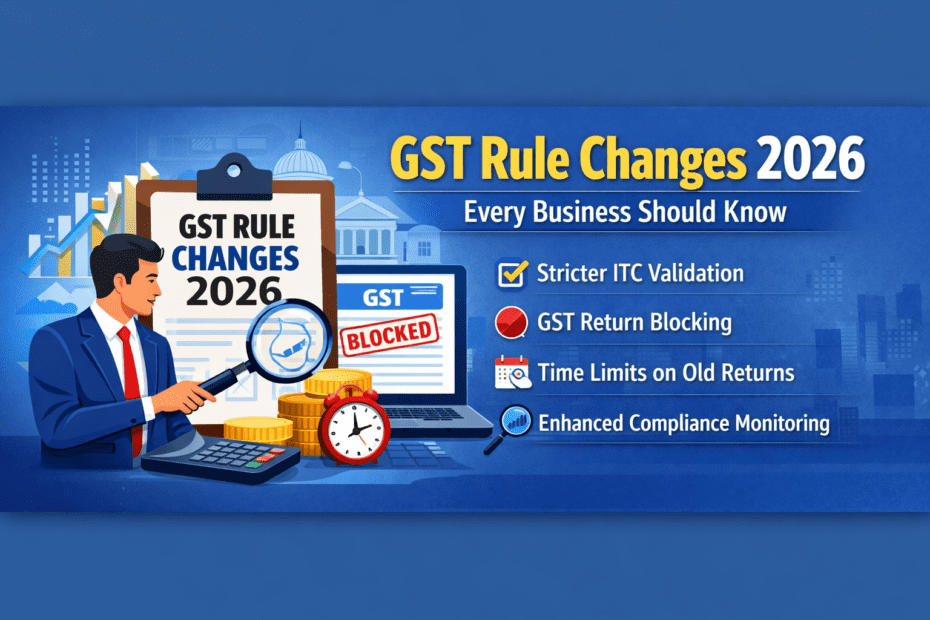
The GST Rule Changes 2026 mainly focus on stricter verification of input tax credit, stronger system validations, and improved monitoring of taxpayer activities. These changes affect how businesses manage invoices, claim tax credits, and file GST returns.
For business owners, accountants, and tax professionals, understanding the GST Rule Changes 2026 is essential. Staying updated can help avoid penalties, prevent blocked returns, and maintain smooth GST compliance.
Understanding the GST Rule Changes 2026
The GST Rule Changes 2026 aim to improve transparency and accuracy in GST reporting. Over the past few years, authorities have noticed issues such as fake invoices, incorrect tax credit claims, and delayed return filings. These practices can affect tax collection and create unfair advantages for non-compliant businesses.
To address these challenges, the government has strengthened the GST system through technology and automated checks. The GST Rule Changes 2026 introduce stronger validation rules that compare data from multiple GST returns before allowing certain actions, such as claiming ITC or filing returns.
For businesses, this means that accounting records, purchase invoices, and GST filings must all match accurately. Any mismatch between records and GST portal data may lead to system alerts or compliance notices.
Stricter Verification of Input Tax Credit
One of the most important aspects of the GST Rule Changes 2026 is stricter verification of Input Tax Credit (ITC). ITC allows businesses to reduce their tax liability by claiming credit for the GST paid on purchases.
However, incorrect ITC claims have been a major concern for tax authorities. In some cases, businesses claim credit based on invoices that are not properly reported by suppliers. To prevent this, the GST Rule Changes 2026 introduce stronger cross-checking between supplier and buyer records.
Now, ITC claims must closely match the data available in GSTR-2B and other GST records. If there is a mismatch between the purchase records of the buyer and the supplier’s return filings, the system may restrict the credit claim.
Because of the GST Rule Changes 2026, businesses should reconcile their purchase invoices with GSTR-2B regularly to ensure that all ITC claims are valid.
GST Return Filing Restrictions
Another important update under the GST Rule Changes 2026 is the introduction of stricter validations before filing GST returns.
In the past, taxpayers could sometimes submit returns even when certain errors existed in their records. However, the GST portal now performs more detailed checks before allowing returns to be filed.
Under the GST Rule Changes 2026, the system may prevent return submission if there are discrepancies in ledger balances, missing details, or inconsistencies between previous returns.
These system restrictions encourage taxpayers to correct errors before filing returns. As a result, businesses must carefully review their GST data and ensure that all records are accurate before submitting returns.
Automated Calculation of Late Fees
Late filing penalties have always been part of GST compliance. However, many taxpayers previously found it confusing to calculate late fees correctly.
The GST Rule Changes 2026 improve this process by introducing automated late fee calculations directly within the GST portal. When taxpayers file returns after the due date, the system automatically calculates the applicable penalty based on the delay.
This automation ensures that penalties are calculated accurately and applied consistently. Because of the GST Rule Changes 2026, businesses should pay closer attention to filing deadlines to avoid unnecessary compliance costs.
Time Limit for Filing Old GST Returns
One of the most impactful updates introduced in recent years relates to the time limit for filing old GST returns.
According to the new rules, taxpayers cannot file GST returns that are more than three years old. This change was implemented to prevent indefinite delays in return filing and to maintain accurate tax records.
The GST Rule Changes 2026 reinforce the importance of timely compliance. Businesses that fail to file their returns within the allowed time period may permanently lose the opportunity to claim certain tax credits or correct past records.
This makes it essential for businesses to regularly review their GST filings and ensure that no returns remain pending.
Improvements in GST Registration
Another significant development associated with the GST Rule Changes 2026 is the improvement in the GST registration process.
The government has made efforts to simplify registration for new businesses by introducing faster approval mechanisms and improved digital verification processes.
In many cases, if all required documents are submitted correctly and there are no discrepancies, GST registration applications may be processed more quickly.
The improvements introduced under the GST Rule Changes 2026 help entrepreneurs start their businesses faster while ensuring that the GST system remains secure and transparent.
Increased Use of Technology in Compliance Monitoring
The GST system now relies heavily on digital technology and automated data analysis. The GST Rule Changes 2026 strengthen compliance monitoring through advanced system validations.
The GST portal analyzes various data points, including invoice data, tax credit claims, and return filing patterns. If unusual activity is detected, the system may generate alerts or initiate verification procedures.
For businesses, this means that maintaining accurate records is more important than ever. Even minor inconsistencies in invoices or tax data may trigger scrutiny.
By improving monitoring mechanisms, the GST Rule Changes 2026 aim to create a more transparent and reliable tax environment.
Importance of Regular GST Reconciliation
Because of the stronger system validations introduced through the GST Rule Changes 2026, reconciliation has become an essential part of GST compliance.
Reconciliation involves comparing a business’s internal accounting records with the data available on the GST portal. This process helps identify mismatches or errors before returns are filed.
Businesses should regularly reconcile:
Purchase records with GSTR-2B
Sales invoices with GSTR-1
Tax payments with the electronic cash ledger
Proper reconciliation helps ensure compliance with the GST Rule Changes 2026 and reduces the risk of notices or penalties.
Steps Businesses Should Take to Stay Compliant
Adapting to the GST Rule Changes 2026 requires businesses to strengthen their compliance practices.
Here are some key steps that businesses should follow:
Maintain Accurate Records
All invoices, purchase records, and sales transactions should be recorded accurately and maintained properly.
Reconcile GST Data Regularly
Regular reconciliation helps identify discrepancies early and prevents compliance issues.
File Returns on Time
Timely filing of GST returns ensures that businesses avoid late fees and system restrictions.
Use Reliable Accounting Software
Modern accounting software can help automate GST calculations and reduce the chances of errors.
Monitor GST Portal Updates
Businesses should regularly check the GST portal for notices, alerts, or updates related to their GST accounts.
Following these practices will help businesses adapt smoothly to the GST Rule Changes 2026.
Benefits of the New GST Compliance Framework
Although stricter compliance rules may seem challenging initially, the changes introduced under the GST Rule Changes 2026 offer several long-term benefits.
Some of the key advantages include:
Improved transparency in tax reporting
Reduced fraudulent tax credit claims
Faster registration for new businesses
Better monitoring of tax compliance
Stronger trust in the GST system
These improvements contribute to a more efficient tax structure that benefits both businesses and the government.
Conclusion
The GST Rule Changes 2026 highlight the government’s continued effort to strengthen India’s GST system through technology and stricter compliance standards. With improved verification of tax credits, automated late fee calculations, and enhanced monitoring mechanisms, the GST framework is becoming more efficient and transparent.
For businesses, understanding the GST Rule Changes 2026 is crucial to avoid compliance risks. Maintaining accurate records, performing regular reconciliation, and filing returns on time will help businesses operate smoothly within the updated tax framework.
By staying informed and adapting to the GST Rule Changes 2026, businesses can ensure long-term compliance and maintain confidence in their tax operations.